Image


In BE HEARD I & II, 48% (n=289) and 52% (n=291) of patients on BIMZELX 320 mg achieved HiSCR50 at Week 16‡ vs 29% (n=72) and 32% (n=74) taking placebo, respectively.2
HiSCR is an assessment of the percentage reduction in abscesses and inflammatory nodule counts through the body, with no increase in abscess and in draining tunnel count relative to baseline.2
In BE HEARD I, HiSCR50 at Week 16 was not met with Q4W dosing (P=0.030).
Modified non-responder imputation whereby patients who took any systemic antibiotic or who discontinued study treatment due to adverse events were treated as non-responders, other missing data were imputed as multiple imputation.
(P≤0.025).
First pivotal studies of a biologic for HS with HiSCR75 as a key secondary endpoint1,3
POOLED BE HEARD I AND II DATA1
HiSCR50 (mNRI)
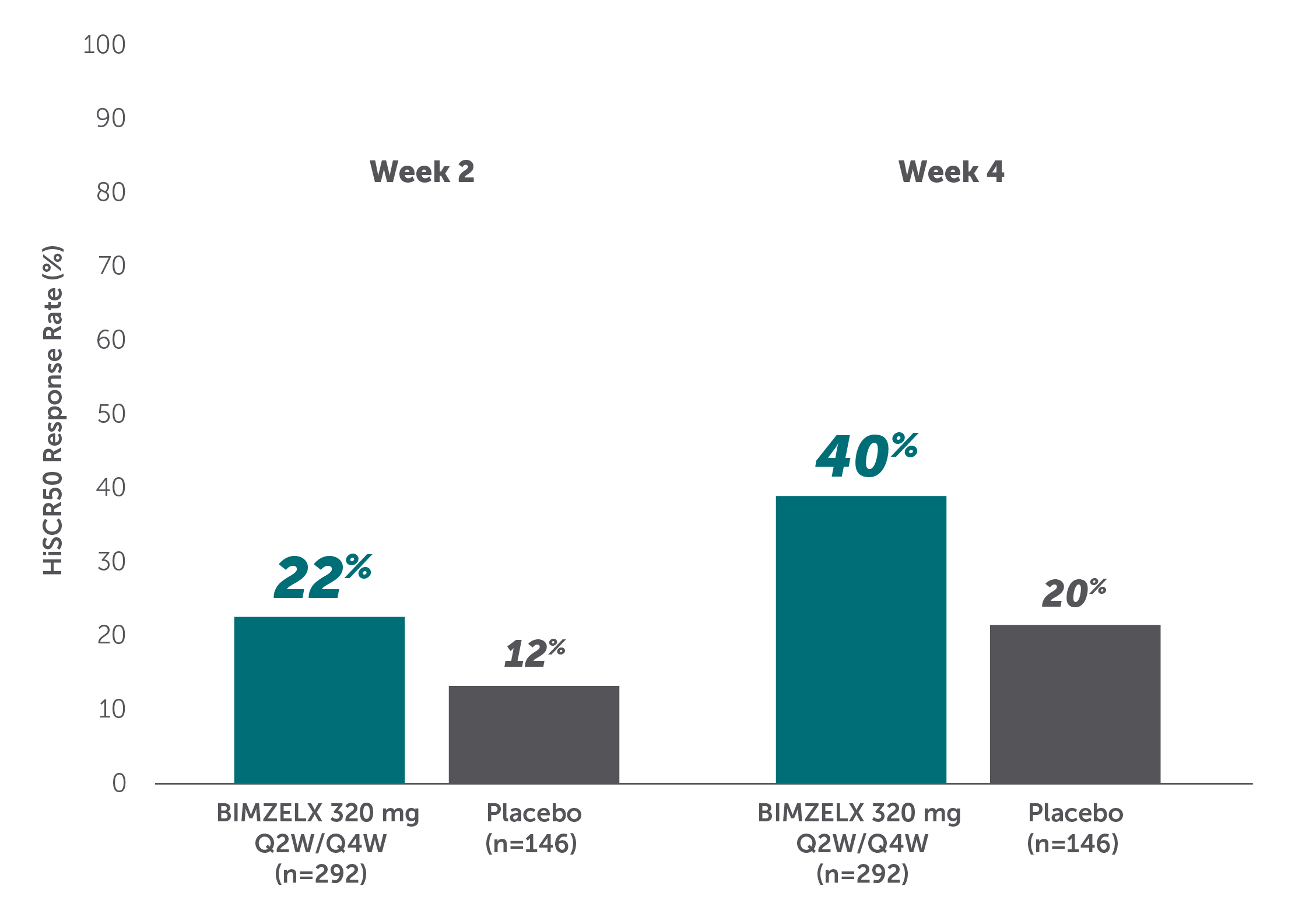
Based on pooled mNRI analysis of prespecified exploratory endpoints, where patients who discontinued due to lack of efficacy/adverse events, or received systemic antibiotics identified as rescue medication for HS by the principal investigator, were considered non-responders; other missing data were imputed as multiple imputation. No clinical or statistical conclusions can be drawn.
From the very first dose as measured at Week 2; results were not immediate.1
POOLED BE HEARD I AND II DATA1
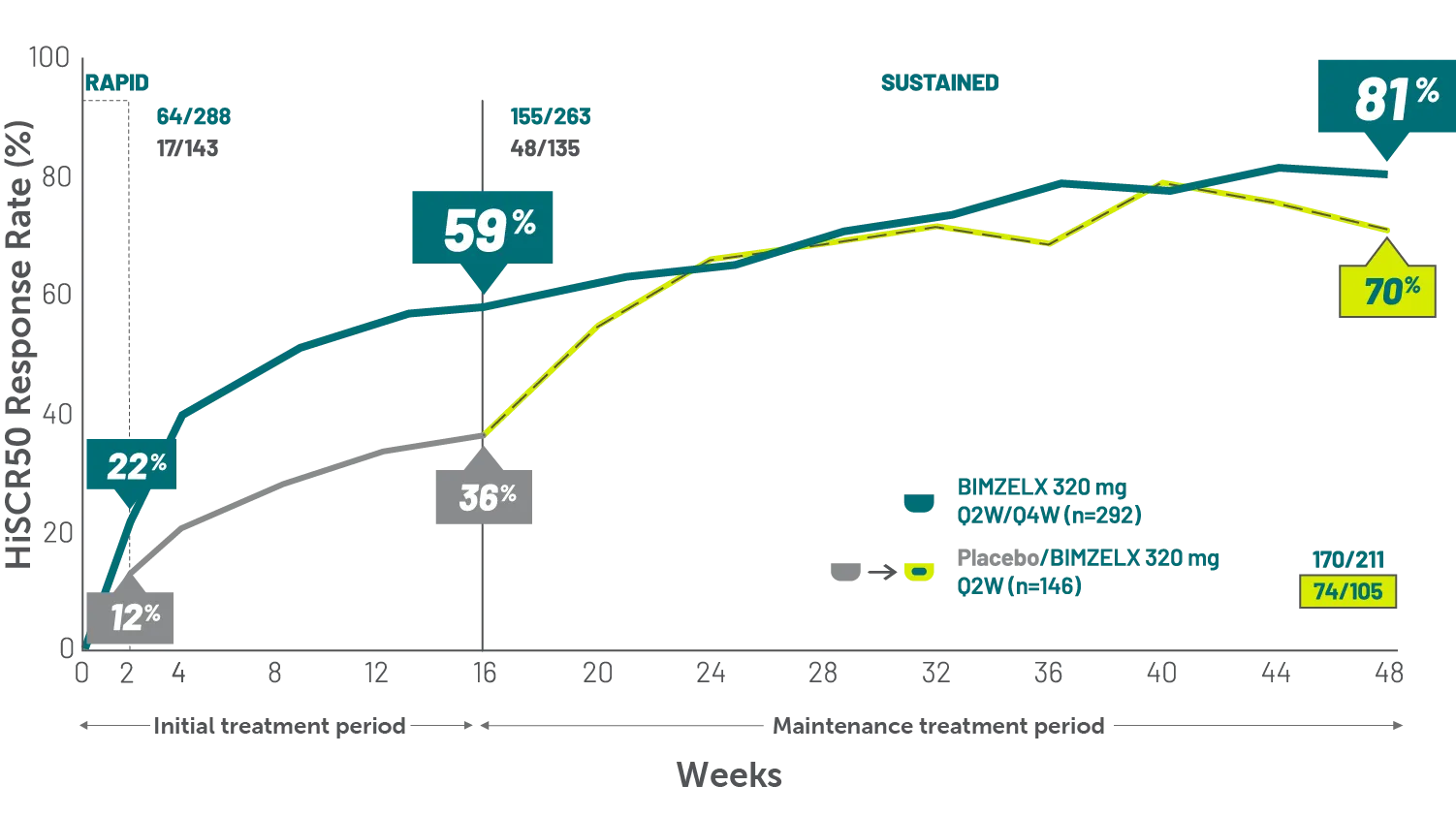
HiSCR50 RESPONSE (OC)||
HiSCR50
POOLED BE HEARD I AND II DATA1
HiSCR50 RESPONSE (OC)||
ALL
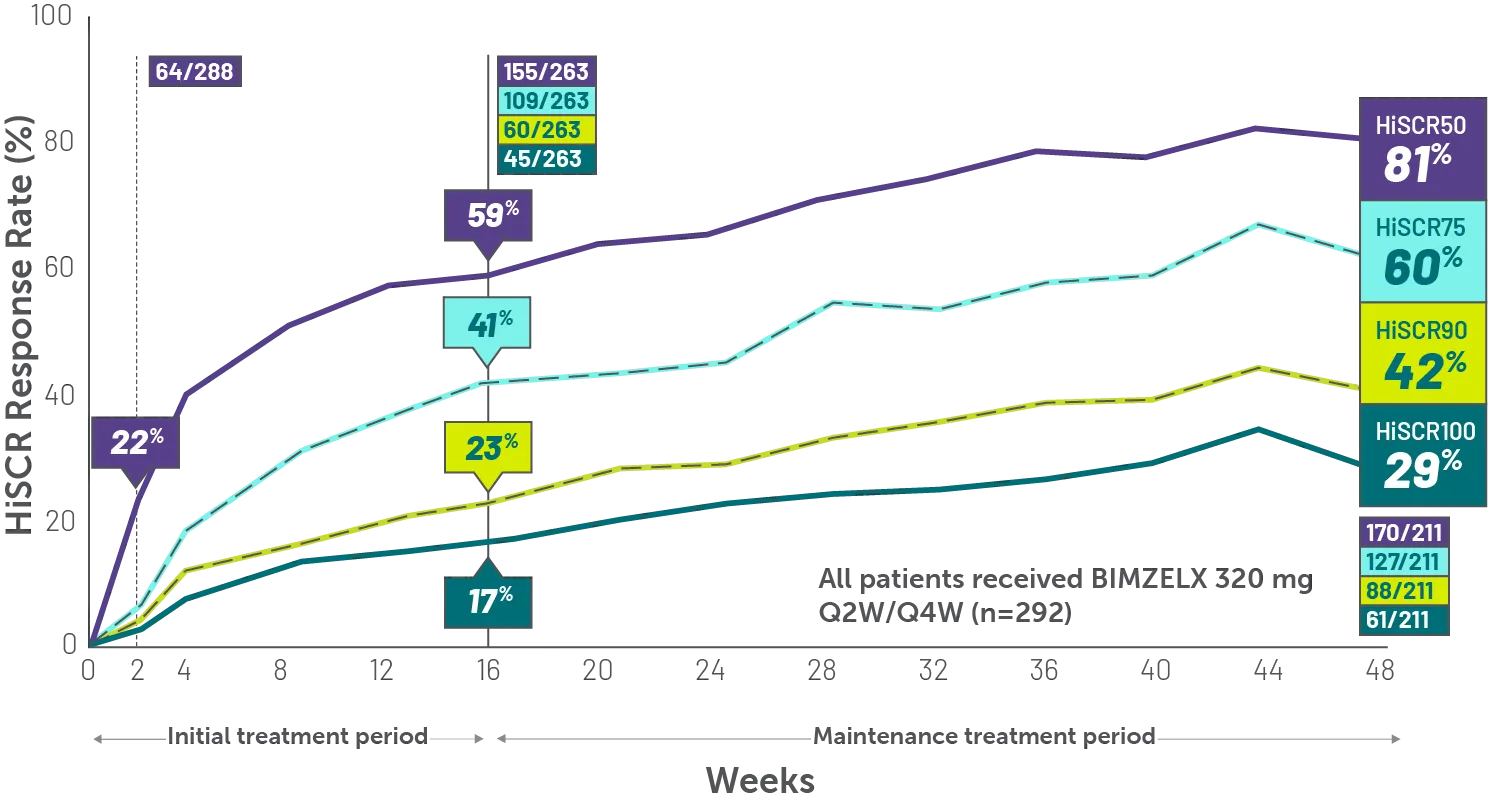
Based on pooled data from pivotal trials as observed prespecified exploratory endpoints where patients with missing data at a specific time were not included. No clinical or statistical conclusions can be drawn.1
Placebo (N=146) at Week 16 was 36% (48/135) for HiSCR50, 19% (25/135) for HiSCR75, 10% (13/135) for HiSCR90, and 6% (8/135) for HiSCR1001
RCT
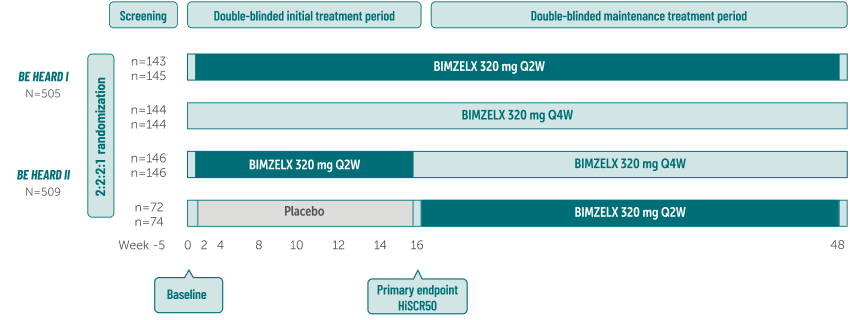
Replicate phase 3, pivotal study evaluating the efficacy and safety of BIMZELX in study participants with moderate-to-severe HS. The primary endpoint was HiSCR50 at Week 16 vs placebo.1
POOLED BE HEARD I AND II DATA1
HiSCR50 (mNRI)
Based on pooled mNRI analysis of prespecified exploratory endpoints, where patients who discontinued due to lack of efficacy/adverse events, or received systemic antibiotics identified as rescue medication for HS by the principal investigator, were considered non-responders; other missing data were imputed as multiple imputation. No clinical or statistical conclusions can be drawn.
From the very first dose as measured at Week 2; results were not immediate.1
POOLED BE HEARD I AND II DATA1
HiSCR50 RESPONSE (OC)||
HiSCR50
POOLED BE HEARD I AND II DATA1
HiSCR50 RESPONSE (OC)||
ALL
Based on pooled data from pivotal trials as observed prespecified exploratory endpoints where patients with missing data at a specific time were not included. No clinical or statistical conclusions can be drawn.1
Placebo (N=146) at Week 16 was 36% (48/135) for HiSCR50, 19% (25/135) for HiSCR75, 10% (13/135) for HiSCR90, and 6% (8/135) for HiSCR1001
RCT
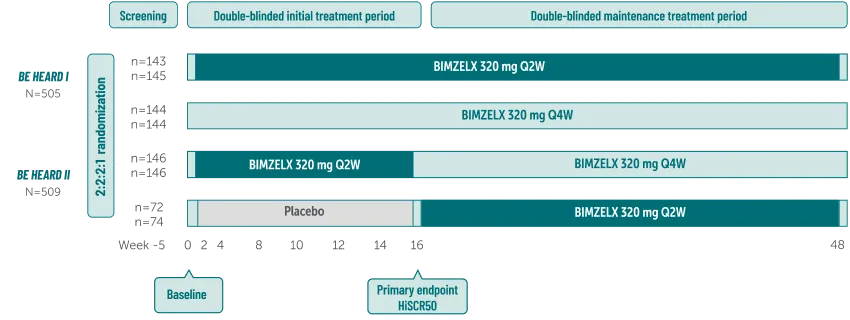
Replicate phase 3, pivotal study evaluating the efficacy and safety of BIMZELX in study participants with moderate-to-severe HS. The primary endpoint was HiSCR50 at Week 16 vs placebo.1
The HSSDD is a patient-reported outcome instrument, specifically developed to assess the patient-perceived severity of 5 core HS signs and symptoms. Pain response was defined as an improvement from baseline in HSSDD weekly worst skin pain score of at least 3 points among patients with a baseline score of 3 or higher based on a 0 to 10 NRS.4
AN=abscesses and nodules; HiSCR=Hidradenitis Suppurativa Clinical Response; HS=hidradenitis suppurativa; HSSDD=Hidradenitis Suppurativa Symptom Daily Diary; mNRI=modified non-responder imputation; NRS=numeric rating scale; OC=observed case; OLE=open label extension; RCT=randomized control trial; Q2W=every 2 weeks; Q4W=every 4 weeks.
References: 1. Data on file. UCB, Inc.; Smyrna, GA. 2. BIMZELX [prescribing information]. Smyrna, GA: UCB, Inc. 3. Kimball AB, Jemec GBE, Sayed CJ, et al. Efficacy and safety of bimekizumab in patients with moderate-to-severe hidradenitis suppurativa (BE HEARD I and BE HEARD II): two 48-week, randomised, double-blind, placebo-controlled, multicentre phase 3 trials. Lancet. 2024;403(10443):2504-2519. 4. Ingram JR, Ciarvino V, Rolleri R, et al. Electronic patient-reported outcomes in hidradenitis suppurativa: content validity and usability of the electronic Hidradenitis Suppurativa Symptom Daily Diary, Hidradenitis Suppurativa Symptom Questionnaire, and Hidradenitis Suppurativa Quality of Life Questionnaire. Dermatology. 2024;240(1):65-76.
HiSCR=Hidradenitis Suppurativa Clinical Response; HS=hidradenitis suppurativa; mNRI=modified non-responder imputation; OC=observed case; OLE=open label extension; RCT=randomized control trial; Q2W=every 2 weeks; Q4W=every 4 weeks.
References: 1. Data on file. UCB, Inc.; Smyrna, GA. 2. BIMZELX [prescribing information]. Smyrna, GA: UCB, Inc. 3. Kimball AB, Jemec GBE, Sayed CJ, et al. Efficacy and safety of bimekizumab in patients with moderate-to-severe hidradenitis suppurativa (BE HEARD I and BE HEARD II): two 48-week, randomised, double-blind, placebo-controlled, multicentre phase 3 trials. Lancet. 2024;403(10443):2504-2519. 4. Ingram JR, Ciarvino V, Rolleri R, et al. Electronic patient-reported outcomes in hidradenitis suppurativa: content validity and usability of the electronic Hidradenitis Suppurativa Symptom Daily Diary, Hidradenitis Suppurativa Symptom Questionnaire, and Hidradenitis Suppurativa Quality of Life Questionnaire. Dermatology. 2024;240(1):65-76.
US-BK-2501390
BIMZELX is indicated for the treatment of adults with active psoriatic arthritis, active non-radiographic axial spondyloarthritis with objective signs of inflammation, active ankylosing spondylitis, moderate-to-severe plaque psoriasis who are candidates for systemic therapy or phototherapy, and moderate-to-severe hidradenitis suppurativa.
BIMZELX may increase the risk of suicidal ideation and behavior (SI/B). A causal association between treatment with BIMZELX and increased risk of SI/B has not been definitively established. Prescribers should weigh the potential risks and benefits before using BIMZELX in patients with a history of severe depression or SI/B. Advise monitoring for the emergence or worsening of depression, suicidal ideation, or other mood changes. If such changes occur, instruct to promptly seek medical attention, refer to a mental health professional as appropriate, and re-evaluate the risks and benefits of continuing treatment.
BIMZELX may increase the risk of infections, including serious infections. Do not initiate treatment with BIMZELX in patients with any clinically important active infection until the infection resolves or is adequately treated. In patients with a chronic infection or a history of recurrent infection, consider the risks and benefits prior to prescribing BIMZELX. Instruct patients to seek medical advice if signs or symptoms suggestive of clinically important infection occur. If a patient develops such an infection or is not responding to standard therapy, monitor the patient closely and do not administer BIMZELX until the infection resolves.
Evaluate patients for tuberculosis (TB) infection prior to initiating treatment with BIMZELX. Avoid the use of BIMZELX in patients with active TB infection. Initiate treatment of latent TB prior to administering BIMZELX. Consider anti-TB therapy prior to initiation of BIMZELX in patients with a past history of latent or active TB in whom an adequate course of treatment cannot be confirmed. Closely monitor patients for signs and symptoms of active TB during and after treatment.
Elevated serum transaminases were reported in clinical trials with BIMZELX. Test liver enzymes, alkaline phosphatase, and bilirubin at baseline, periodically during treatment with BIMZELX, and according to routine patient management. If treatment-related increases in liver enzymes occur and drug-induced liver injury is suspected, interrupt BIMZELX until a diagnosis of liver injury is excluded. Permanently discontinue use of BIMZELX in patients with causally associated combined elevations of transaminases and bilirubin. Avoid use of BIMZELX in patients with acute liver disease or cirrhosis.
Cases of inflammatory bowel disease (IBD) have been reported in patients treated with IL-17 inhibitors, including BIMZELX. Avoid use of BIMZELX in patients with active IBD. During BIMZELX treatment, monitor patients for signs and symptoms of IBD and discontinue treatment if new onset or worsening of signs and symptoms occurs.
Prior to initiating therapy with BIMZELX, complete all age-appropriate vaccinations according to current immunization guidelines. Avoid the use of live vaccines in patients treated with BIMZELX.
Most common (≥1%) adverse reactions in plaque psoriasis and hidradenitis suppurativa include upper respiratory tract infections, oral candidiasis, headache, injection site reactions, tinea infections, gastroenteritis, herpes simplex infections, acne, folliculitis, other candida infections, and fatigue.
Most common (≥2%) adverse reactions in psoriatic arthritis include upper respiratory tract infections, oral candidiasis, headache, diarrhea, and urinary tract infections.
Most common (≥2%) adverse reactions in non-radiographic axial spondyloarthritis include upper respiratory tract infections, oral candidiasis, headache, diarrhea, cough, fatigue, musculoskeletal pain, myalgia, tonsillitis, transaminase increase, and urinary tract infections.
Most common (≥2%) adverse reactions in ankylosing spondylitis include upper respiratory tract infections, oral candidiasis, headache, diarrhea, injection site pain, rash, and vulvovaginal mycotic infection.
Please see the full Prescribing Information.
Most common (≥2%) adverse reactions in PsA, nr-axSpA, and AS include upper respiratory tract infections, oral candidiasis, headache, diarrhea, and urinary tract infections. Other most common (≥2%) adverse reactions specific to each indication include: urinary tract infections (PsA); cough, fatigue, musculoskeletal pain, myalgia, tonsillitis, transaminase increase, and urinary tract infections (nr-axSpA); injection site pain, rash, and vulvovaginal mycotic infections (AS).

For US Healthcare Professionals Only
The contents of this website are intended
for US Healthcare Professionals only.
By clicking “I am a Healthcare Professional,”
you are confirming that you are a
US Healthcare Professional.